The era of waiting for expensive development cycles to fix manual inefficiencies is over. In 2026, no code workflow automation has shifted from a “nice-to-have” productivity hack to a core enterprise necessity. At Toptest Global, having delivered over 100+ successfully automated projects, we have seen firsthand how the right automation strategy separates market leaders from those struggling with operational debt.
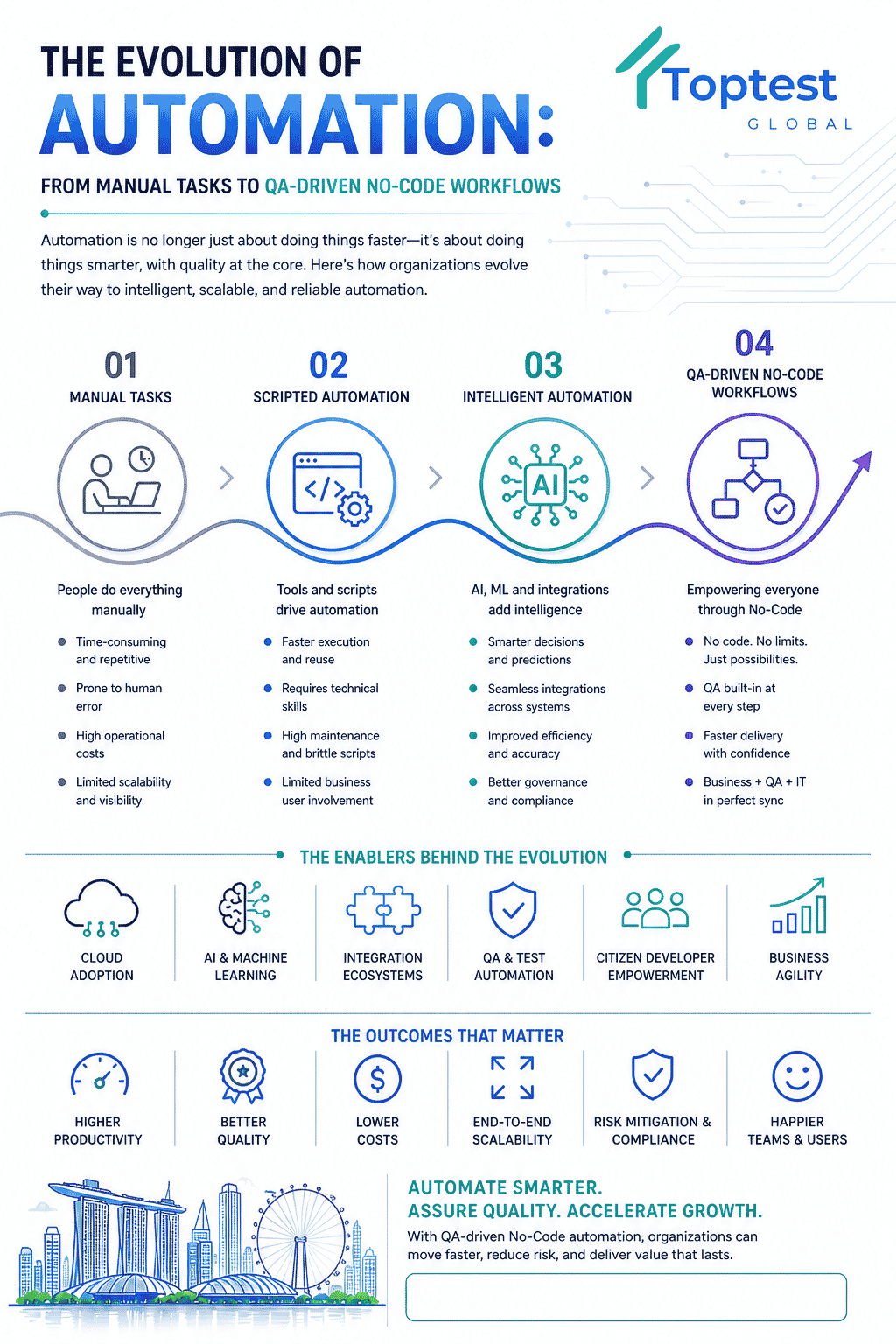
However, the rapid adoption of business process automation (BPA) often comes with a hidden cost: fragility. Without a structured approach, automated workflows can break, creating more work than they save. This guide explores how to leverage a visual workflow builder to achieve scale, while anchoring your digital transformation in a QA-driven workflow automation framework.
Why Traditional Automation Often Fails
Many organizations jump into low code workflow automation expecting instant ROI, only to be met with integration errors and data silos. In our experience working across our development centers in Singapore and Viet Nam we’ve identified that the primary reason for failure isn’t the software—it’s the lack of rigorous testing.
When a business rules engine is poorly configured, it can trigger thousands of incorrect actions in seconds. This is why we advocate for process automation in software project management that treats every workflow as a mission-critical application.
Common Pitfalls in Workflow Management:
-
The “set it and forget it” trap: Workflows that aren’t monitored for edge-case errors.
-
Lack of BPMN process mapping: Automating a broken process only makes it break faster.
-
Ignoring Software QA automation: Failing to test how new automations interact with legacy systems.
The Toptest Advantage: QA-Driven Workflow Automation
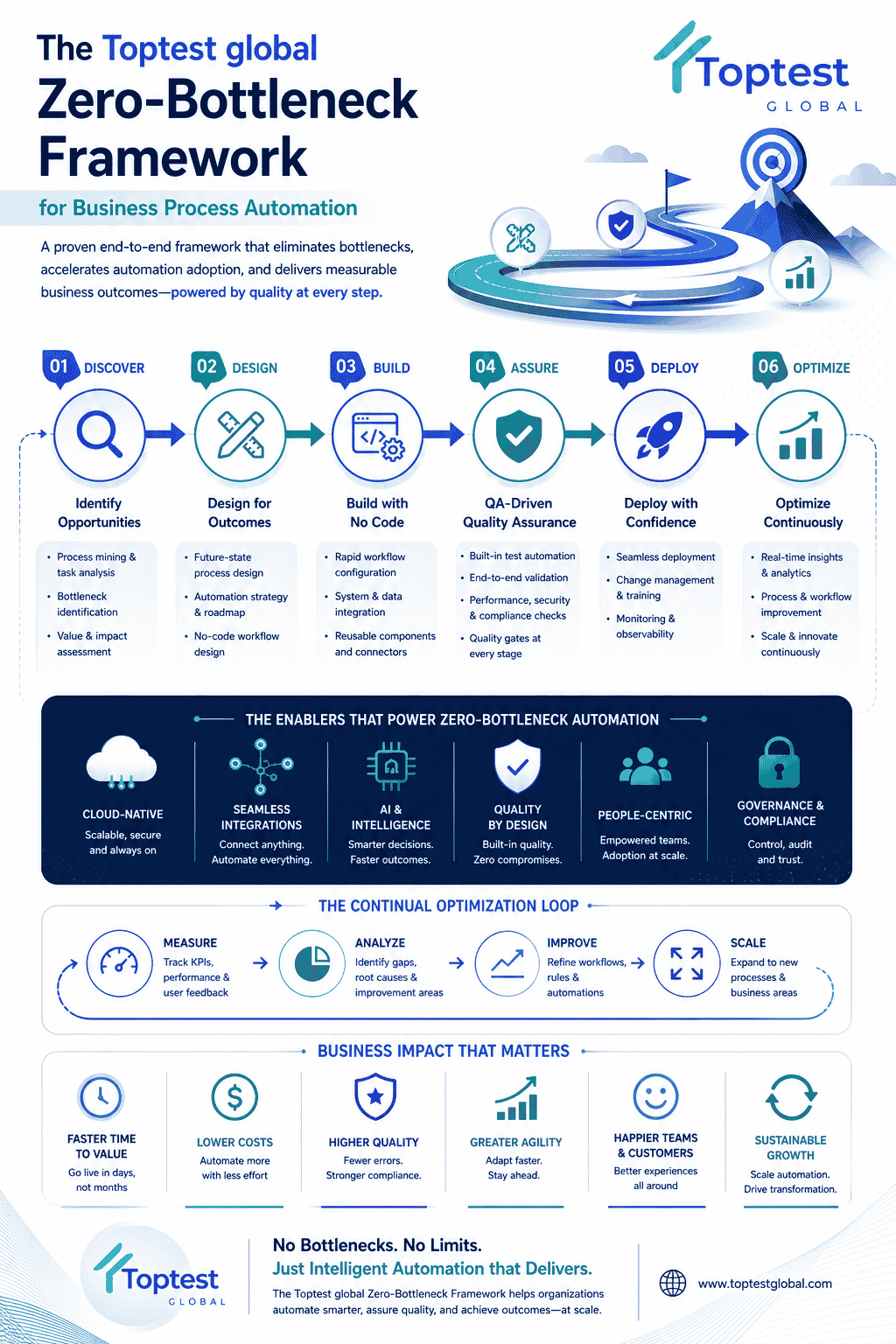
At Toptest Global, we don’t just build workflows; we engineer zero-bottleneck automation. Our unique methodology integrates software QA automation directly into the deployment phase. This ensures that every digital process automation step is validated before it hits your production environment.
We utilize advanced automated QA testing software and frameworks like Playwright automation to simulate user interactions. This allows us to stress-test your no code workflow automation logic against real-world scenarios.
“By combining workflow management software with rigorous QA protocols, we’ve maintained a 98% client retention rate, ensuring that our clients’ automated systems remain resilient as they scale.”
Comparing Leading No-Code & Low-Code Platforms
Choosing the right workflow automation tool depends on your technical debt and scaling needs. Whether you need an n8n integration for complex data mapping or Cflow integration for streamlined approvals, the choice must be strategic.
| Feature | n8n (Low-Code) | Cflow (No-Code) | Enterprise BPM |
| Primary User | Technical Ops / Devs | Business Managers | IT Departments |
| Visual Builder | Nodes & Connections | Drag-and-Drop Form | BPMN 2.0 Compliant |
| Best For | Complex API data flow | Standardized Approvals | High-compliance Org |
| QA Integration | High (Playwright/API) | Medium | High |
For a deeper dive into making the right choice, see our business workflow automation selection guide.
High-Impact Use Cases for 2026
In our 100+ projects, we have identified several high-ROI areas where process automation software provides immediate value:
1. HR Process Automation
Manual hiring is a bottleneck. We implement automated employee onboarding systems that handle everything from document collection to account provisioning. This reduces time-to-productivity by up to 40%.
2. Finance and Operations
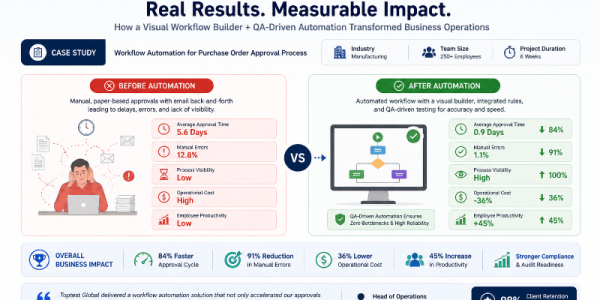
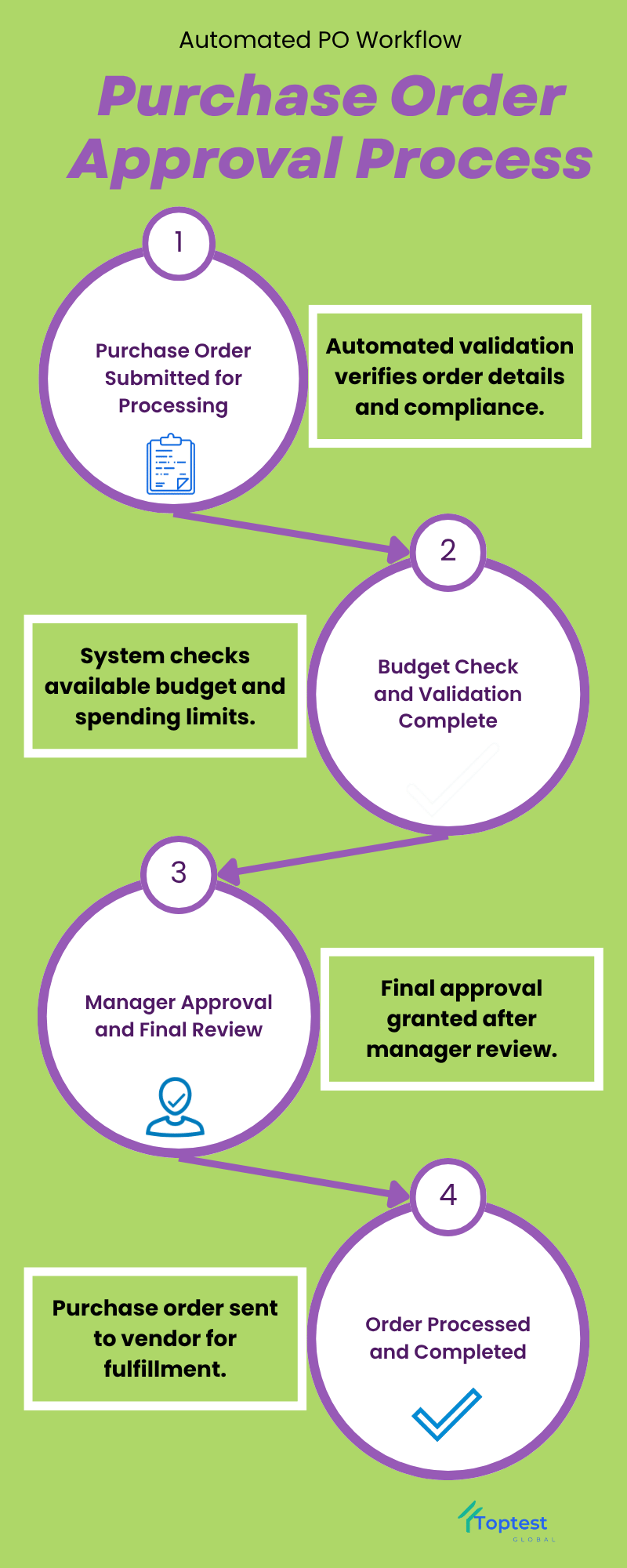
Automated purchase order approval ensures that budget compliance is handled by a business rules engine rather than a chain of manual emails.
3. Sales and Customer Success
Client onboarding automation allows your team to focus on relationship building while the no code workflow automation handles data entry, CRM updates, and welcome sequences.
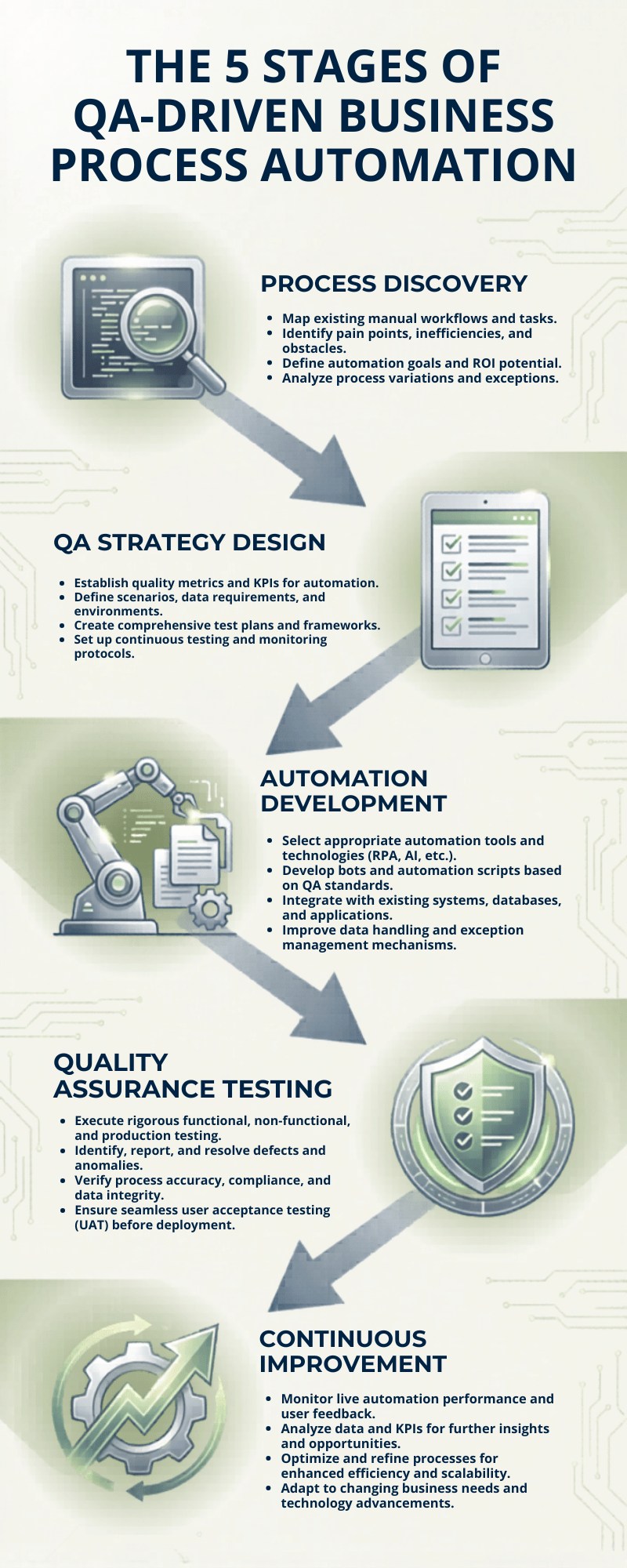
How to Implement Scalable Workflows: A 5-Step Framework
Based on our hands-on experience implementing QA-driven automation, we recommend the following lifecycle:
-
Discovery & BPMN Mapping: Document the “As-Is” process and design the “To-Be” state.
-
Tool Selection: Align your needs with a visual workflow builder (e.g., n8n, Zapier, or Cflow).
-
QA-Driven Development: Build the workflow while simultaneously writing Playwright automation scripts to test it.
-
UAT & Stress Testing: Ensure the business process automation handles high volumes without latency.
-
Continuous Monitoring: Use workflow management software to track performance and ROI.
If you are just starting, read our guide on what is workflow automation to understand the fundamental building blocks.
The Role of Playwright and Modern Frameworks
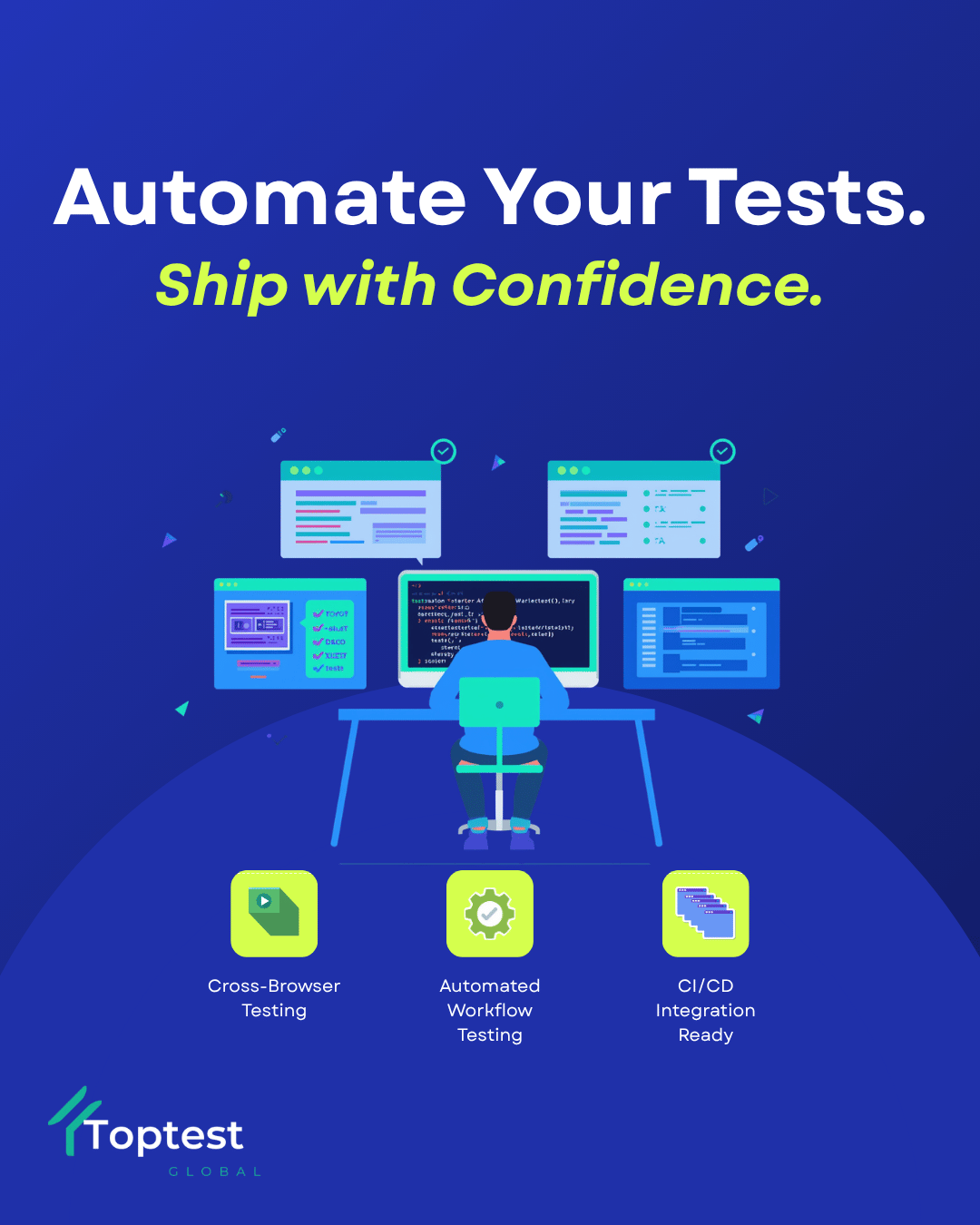
Why do we emphasize Playwright automation? In the modern web-based enterprise, workflows often span multiple SaaS platforms. Playwright allows us to perform end-to-end testing across browsers, ensuring that your no code workflow automation doesn’t break when a third-party software updates its UI.
This level of automated QA testing software integration is what allows Toptest Global to deliver enterprise-grade reliability to startups and multinationals alike. You can learn more about our broader strategy in our business process automation complete guide.
Results and ROI: What to Expect
Implementing a zero-bottleneck automation strategy isn’t just about saving time; it’s about accuracy.
-
Cost Reduction: Reduce operational overhead by 30-50%.
-
Error Mitigation: QA-driven workflows eliminate 99.9% of manual data entry errors.
-
Scalability: Process 10x the volume without increasing headcount.
Conclusion: Future-Proof Your Business
As we move through 2026, no code workflow automation will continue to evolve with AI integrations and more complex BPM software capabilities. However, the foundation of success remains the same: a clear process, the right tools, and a relentless focus on quality through software QA.
At Toptest Global, our cross-border expertise in Singapore and Hanoi is ready to help you navigate this transition. Don’t let your automation become a liability.
Ready to Build a Zero-Bottleneck Business?
Primary Action: Book a Free 45-minute Automation & QA Audit
Our experts will review your current processes and provide a roadmap for resilient, scalable no code workflow automation.
Frequently Asked Questions
What is the difference between no-code and low-code workflow automation?
No-code platforms are designed for business users to build via visual interfaces. Low code workflow automation provides a visual base but allows developers to add custom scripts for complex logic or integrations.
Is no-code automation secure for enterprise use?
Yes, when implemented with a proper business rules engine and rigorous QA. Most enterprise-grade workflow management software includes SOC2 compliance and advanced encryption.
How does Toptest Global ensure automations don’t break?
We use a QA-driven workflow automation approach. This means we treat every workflow as software, using automated QA testing software like Playwright to validate every path and integration point.