
Selecting the right mobile app development service in Singapore is one of the most consequential decisions a business leader can make in 2026. Get it right, and you launch a product that accelerates growth, streamlines operations, and delights users from day one. Get it wrong, and you inherit months of rework, ballooning budgets, and an app that never reaches its potential. In our 100+ automation and software QA projects delivered from our development centres in Singapore and Vietnam, we have seen both outcomes — and the difference almost always comes down to how rigorously a development partner combines technical execution with quality assurance from the very first sprint.
This pillar guide walks you through every factor that matters: how Singapore’s market is evolving, the seven criteria you must evaluate before signing any contract, why a QA-driven development approach is non-negotiable for enterprise-grade apps, and how to structure your partnership for long-term scalability. Whether you are building a customer-facing app, an internal workflow automation tool, or a full-scale enterprise mobile platform, this guide gives you the blueprint.
Why Choosing the Wrong App Development Partner Can Cost You Everything
The Singapore mobile app development market is competitive, crowded, and — if you are not careful — full of vendors who look identical on paper. A polished website, a slide deck full of logos, and a fixed-price quote are not proof of delivery capability. They are marketing. Evaluating a mobile app development service in Singapore properly requires a structured lens — one that looks past surface-level signals and into the processes, disciplines, and track records that actually determine delivery outcomes.
The real cost of a poor vendor selection is rarely the initial project fee. It is the compounding damage: missed go-to-market windows, post-launch defects that erode user trust, integration failures that block business operations, and the rework cycles that consume your engineering budget before a single feature ships to production.
According to industry research, approximately 70% of enterprise software projects fail to meet their original scope, timeline, or budget — and mobile projects are disproportionately represented in that statistic. The primary culprits are inadequate requirements discovery, weak QA practices, and development workflows that treat testing as an afterthought rather than a foundational discipline.
At Toptest Global, we have spent years studying why apps fail and engineering the processes that prevent it. The insights in this guide come directly from that real-world experience.
What Singapore’s Mobile App Market Demands in 2026
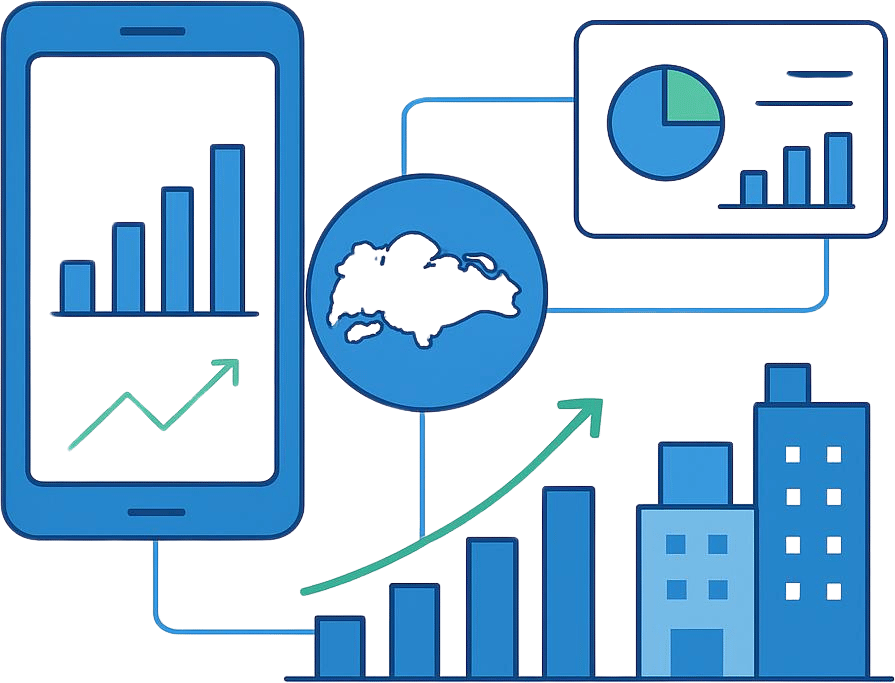
Singapore has one of the highest smartphone penetration rates in Southeast Asia, with mobile internet usage consistently above 90% of the adult population. The regulatory landscape — shaped by MAS guidelines, PDPA data protection requirements, and sector-specific compliance frameworks — adds an additional layer of complexity that pure-play offshore vendors frequently underestimate.
Enterprise buyers in Singapore now demand more than a functional app. They expect:
- Deep integration with existing ERP, CRM, and business process automation systems
- Regulatory compliance baked into the architecture, not bolted on at the end
- Zero-bottleneck deployment pipelines with automated QA gates at every release stage
- Cross-platform capability across iOS and Android without compromising native performance
- A post-launch support model that scales with the business, not just the first release
Meeting these expectations requires a development partner that operates at the intersection of product engineering, software QA automation, and enterprise workflow design — not just a team that writes clean code. Any mobile app development service in Singapore that cannot speak fluently to compliance architecture, integration strategy, and QA methodology is simply not equipped for the complexity of the current enterprise market.
The 7 Critical Factors for Evaluating a Mobile App Development Service in Singapore
Below is the evaluation framework we recommend to every enterprise buyer. Score each vendor against these seven criteria before you shortlist.
1. End-to-End QA-Driven Development Process
The single most important differentiator between a reliable mobile app development service in Singapore and an unreliable one is where quality assurance sits in the process. The majority of vendors treat QA as the final phase — a box to tick before deployment. World-class partners embed QA at every stage: requirements validation, UI/UX review, API contract testing, regression automation, and performance benchmarking.
Ask your prospective vendor directly: “What percentage of your test coverage is automated, and which frameworks do you use?” A vendor that cannot answer this question in detail does not yet have a mature QA practice. At Toptest, our baseline standard is automated regression coverage using Playwright automation — the industry-leading end-to-end testing framework — combined with CI/CD integration so that every code commit is validated before it enters any shared environment.
Based on our hands-on experience implementing QA-driven workflow automation across 100+ projects, teams that front-load QA reduce post-launch defect rates by an average of 60–70% and cut total rework cost by more than half.
2. Technical Stack & Cross-Platform Capabilities
There is no universally correct mobile technology stack, but there are wrong choices for specific contexts. Evaluate vendors on whether they recommend React Native, Flutter, Swift/Kotlin native development, or a low-code/no-code workflow automation platform based on your actual requirements — not based on what their team happens to know best.
The right partner will map your business requirements to a technology recommendation and explain the trade-offs transparently. If a vendor leads with the technology before understanding the problem, that is a red flag.
3. Proven Track Record in Your Industry Vertical
A mobile app for a financial services firm in Singapore carries fundamentally different requirements from one built for a logistics operator or a healthcare provider. Domain experience matters — not just in terms of regulatory awareness, but in understanding the user journeys, integration points, and workflow logic specific to your industry. The best mobile app development service in Singapore will have verifiable, sector-specific case studies — not just a portfolio of generic apps dressed up in your industry’s colour palette.
Request case studies, references, and — wherever possible — a live demo of comparable work. Pay close attention to use cases involving HR process automation, automated employee onboarding, client onboarding automation, or automated purchase order approval, as these are the highest-value use cases where mobile apps consistently deliver measurable ROI.
4. Transparent Project Management & BPMN-Mapped Workflows
Enterprise app development is a complex coordination challenge. The vendors who deliver on time and on scope are those who invest in structured BPMN process mapping at the discovery phase — translating business requirements into visual workflow diagrams that every stakeholder can review, challenge, and sign off before a single line of code is written.
Vendors who skip this step are not saving you time. They are deferring ambiguity into the build phase, where resolving it costs five to ten times more. Ask to see how a vendor runs their discovery workshops and what artefacts they produce before development begins.
5. Integration Capabilities: APIs, n8n, and Business Process Automation
Modern enterprise mobile apps do not stand alone. They are nodes in a broader digital process automation ecosystem — connected to CRM systems, approval workflows, notification engines, and analytics platforms. A mobile app development service in Singapore that cannot demonstrate deep integration experience is building an island, not an enterprise asset.
At our development centres in Singapore and Vietnam, we routinely build mobile apps that integrate with n8n workflows, enterprise BPM software, ERP systems, and custom API layers. We design integration architecture from the discovery phase so that connectivity is never a retrofit.
If your organisation is already running workflow automation software or planning to adopt business process automation (BPA), your mobile app must be architected to extend — not bypass — those digital workflows.
6. Post-Launch Support, Maintenance & Scalability
An app that works perfectly on launch day can degrade rapidly without a structured maintenance regime. OS updates, third-party API changes, user-load growth, and evolving security requirements all require ongoing engineering attention. Before signing, understand exactly what the vendor’s post-launch support model covers, what the SLA commitments are, and how they handle critical defects.
Our 98% client retention rate at Toptest Global is built largely on the quality of our post-launch engagement — we treat every deployment as the beginning of a partnership, not the end of a project.
7. Commercial Flexibility: Fixed Price vs. Outstaffing Model
Different projects suit different commercial models. A well-scoped, well-defined MVP often suits a fixed-price engagement. A long-running product roadmap with evolving requirements is almost always better served by a dedicated outstaffing model — where you embed experienced engineers directly into your team without the overhead of hiring locally in Singapore.
A mature vendor will help you choose the right model for your situation rather than defaulting to whichever is more profitable for them. If a vendor only offers one commercial model regardless of your context, treat that as a signal about their flexibility as a long-term partner.
Why QA-Driven Mobile App Development is the Only Reliable Approach
This is the principle that underpins everything Toptest Global does. When businesses search for a mobile app development service in Singapore, they typically evaluate on price, portfolio, and promises. The variable they routinely underweight — until it bites them — is QA discipline. In the mobile development industry, “QA-driven” is not a marketing phrase — it is a specific methodology that changes how teams make decisions, allocate effort, and measure success at every stage of a project.
The Hidden Cost of Skipping Software QA Automation
Manual QA is not a viable strategy for any app that will serve more than a handful of users. The permutation of device types, OS versions, screen sizes, network conditions, and user paths in a real-world mobile environment is simply too large for a human testing team to cover comprehensively before every release.
The result of inadequate automated QA testing software is predictable: regressions ship to production, user reviews suffer, and the engineering team spends more time firefighting defects than shipping features. Over time, technical debt compounds until releases slow to a crawl.
Software QA automation solves this systematically. Automated test suites run in minutes, cover thousands of scenarios, and catch regressions the moment they are introduced — not days or weeks later when a customer finds them.
How Playwright Automation Eliminates Pre-Launch Risk
Playwright — developed by Microsoft and now the industry standard for end-to-end browser and web-app automation — is the backbone of our automated QA testing practice. For mobile-adjacent web apps and PWAs, Playwright’s cross-browser execution, network interception capabilities, and parallel test running make it the most powerful pre-launch risk elimination tool available.
For native mobile apps, we complement Playwright with Appium and platform-native testing frameworks, creating a unified automated QA testing layer that validates the entire user journey — from onboarding screens to deep-linked workflows — before any build reaches a real device in a client’s hand.
In process automation in software project management, the principle is simple: every build is an opportunity for a regression. Automating the detection of that regression is not optional — it is the cost of shipping confidently at speed.
Zero-Bottleneck Automation: Toptest’s Framework Explained
Our Zero-Bottleneck Automation framework is the operational model that makes QA-driven delivery achievable at scale. It has three pillars:
- Shift-Left Testing: QA engineers join the project at discovery, not after the first sprint. Test cases are drafted from user stories before code is written, ensuring that “done” always means “tested” — not just “built.”
- Automated Pipeline Gates: Every CI/CD stage has automated quality gates. Code that fails a test suite does not proceed to the next environment. Period. This prevents defect propagation and keeps integration branches stable.
- Continuous Feedback Loops: Real-time dashboards surface test results, coverage metrics, and defect trends to both the development team and the client. There are no surprises at go-live — every stakeholder can see the quality state of the product at any time.
This framework draws directly on our experience with QA-driven workflow automation in enterprise software environments — adapted specifically for the higher-velocity, higher-complexity demands of mobile app development.
Industry Use Cases: Mobile App Development Across Key Verticals
The following use cases illustrate how a rigorous mobile app development service in Singapore can transform operations across different industries. Each one is grounded in delivery patterns we have executed or advised on directly — from enterprise HR to fintech to procurement automation.
Automated Employee Onboarding Apps for Enterprise HR
HR process automation is one of the highest-ROI applications of mobile technology in Singapore’s enterprise sector. An automated employee onboarding app replaces weeks of manual document collection, policy acknowledgements, IT provisioning requests, and training scheduling with a guided mobile experience that a new hire can complete in hours — from their phone, before their first day.
Integrated with existing HRIS platforms and approval workflow engines, these apps reduce onboarding cycle time by 60–80% and measurably improve new hire satisfaction scores. The key to building them reliably is mapping the underlying business process automation logic with precision before a single screen is designed.
Client Onboarding Automation in Financial Services & Fintech
Singapore’s financial services sector operates under strict MAS compliance requirements — and client onboarding automation is where mobile apps deliver the most immediate impact. KYC document capture, e-signature workflows, risk profiling questionnaires, and account activation sequences can all be orchestrated within a single mobile app, with automated validation at every step.
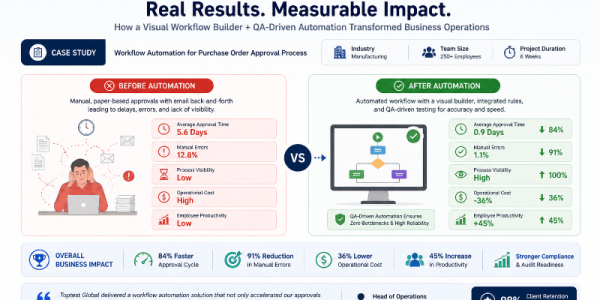
We have seen Singapore fintech clients reduce client onboarding time from an average of 7–14 days (paper-based) to under 24 hours using a well-engineered mobile onboarding app with integrated digital process automation logic.
Mobile Apps for Purchase Order Approval & Procurement Automation
Automated purchase order approval workflows represent another high-value use case for enterprise mobile apps. Finance and procurement teams in Singapore increasingly demand the ability to review, approve, or escalate purchase requests from a mobile device — with full audit trail, multi-level approval logic, and ERP integration built in.
The underlying workflow management software logic for these apps is complex: conditional routing, delegation rules, spend threshold enforcement, and real-time integration with accounting systems. Getting it right requires both strong mobile development capability and deep expertise in business rules engine design — exactly the combination that defines a genuinely capable app development partner.
Workflow Automation Apps for SMEs and Growing Businesses
Not every client is an enterprise. Singapore’s SME sector is increasingly investing in no-code and low-code workflow automation through mobile-first tools that let small teams operate with the efficiency of much larger organisations. Visual workflow builder platforms and tools like n8n and Cflow can be wrapped in a branded mobile interface, giving SMEs sophisticated automation capabilities without the overhead of custom enterprise software.
For SMEs, the ROI case is straightforward: if a workflow automation app saves each employee two hours per week, a 20-person team recovers 40 hours weekly — the equivalent of a full-time hire — in productivity that flows directly to the bottom line.
Singapore vs. Offshore: How to Get the Best of Both Worlds
The Singapore-Vietnam Delivery Model Explained
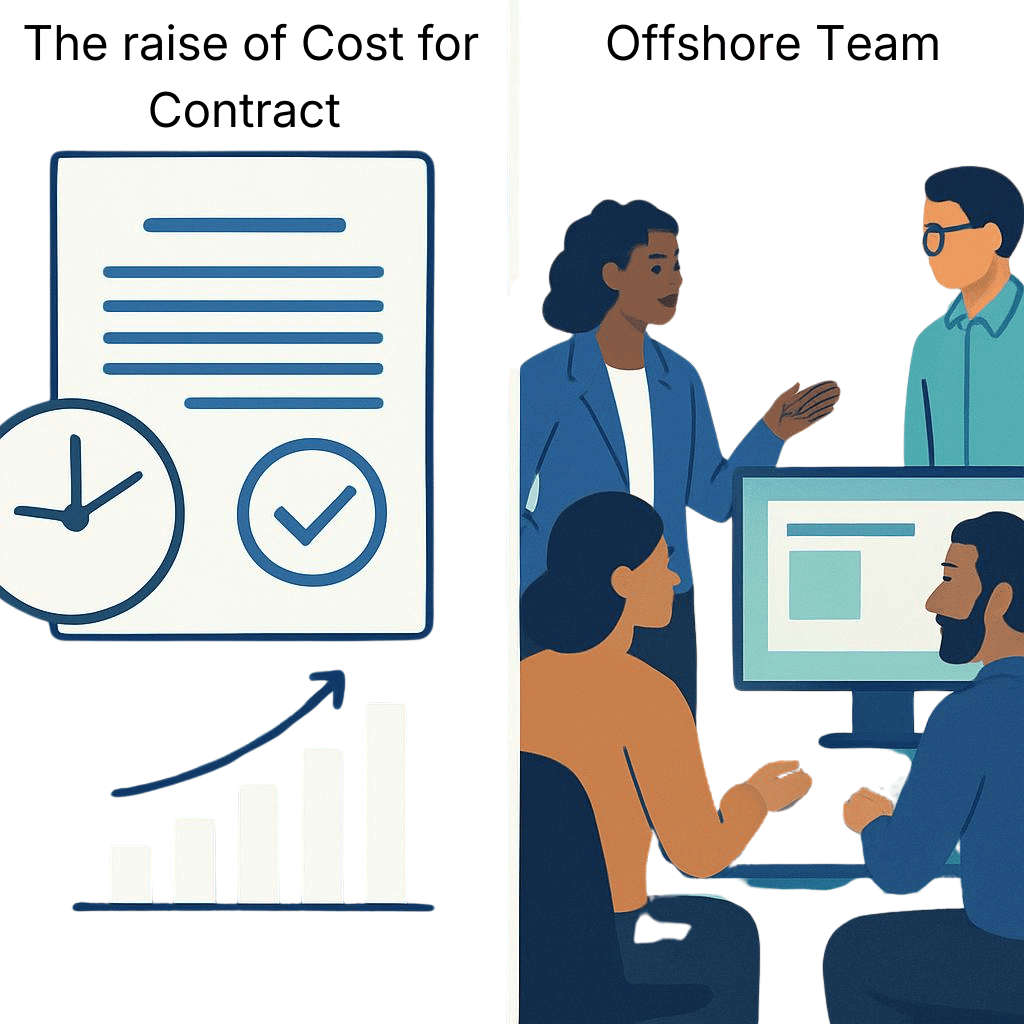
At Toptest Global, we operate from development centres in both Singapore and Vietnam — and this dual-location model is a deliberate strategic choice, not an accident of geography. Singapore provides client proximity, strategic advisory capability, and regulatory fluency. Vietnam provides access to one of Southeast Asia’s deepest pools of engineering talent, at a cost structure that makes enterprise-grade development economically viable for a much wider range of clients.
The result is a delivery model where Singapore clients receive the senior strategic engagement they expect locally, backed by a high-capacity engineering team that operates in the same or an adjacent time zone, with no meaningful communication lag. For buyers who want the accountability of a mobile app development service in Singapore combined with the cost efficiency of a cross-border team, this model is consistently the best of both worlds.
Why Cross-Border Teams Deliver Higher-Quality Apps at Lower Cost
The conventional wisdom is that offshore development trades quality for cost. In our experience, that trade-off is entirely a function of how the engagement is managed — not where the engineers are located. With disciplined BPMN process mapping, automated QA gates, and structured sprint ceremonies, a Singapore-Vietnam team can consistently outperform a purely local team on both quality metrics and delivery speed.
The key is that the quality management infrastructure — the test automation framework, the CI/CD pipeline, the defect tracking discipline — must be non-negotiable regardless of where the engineers sit. That is the principle behind our Zero-Bottleneck Automation framework, and it is what makes cross-border delivery reliably excellent rather than a gamble.
The Mobile App Development Process: A Step-by-Step Blueprint
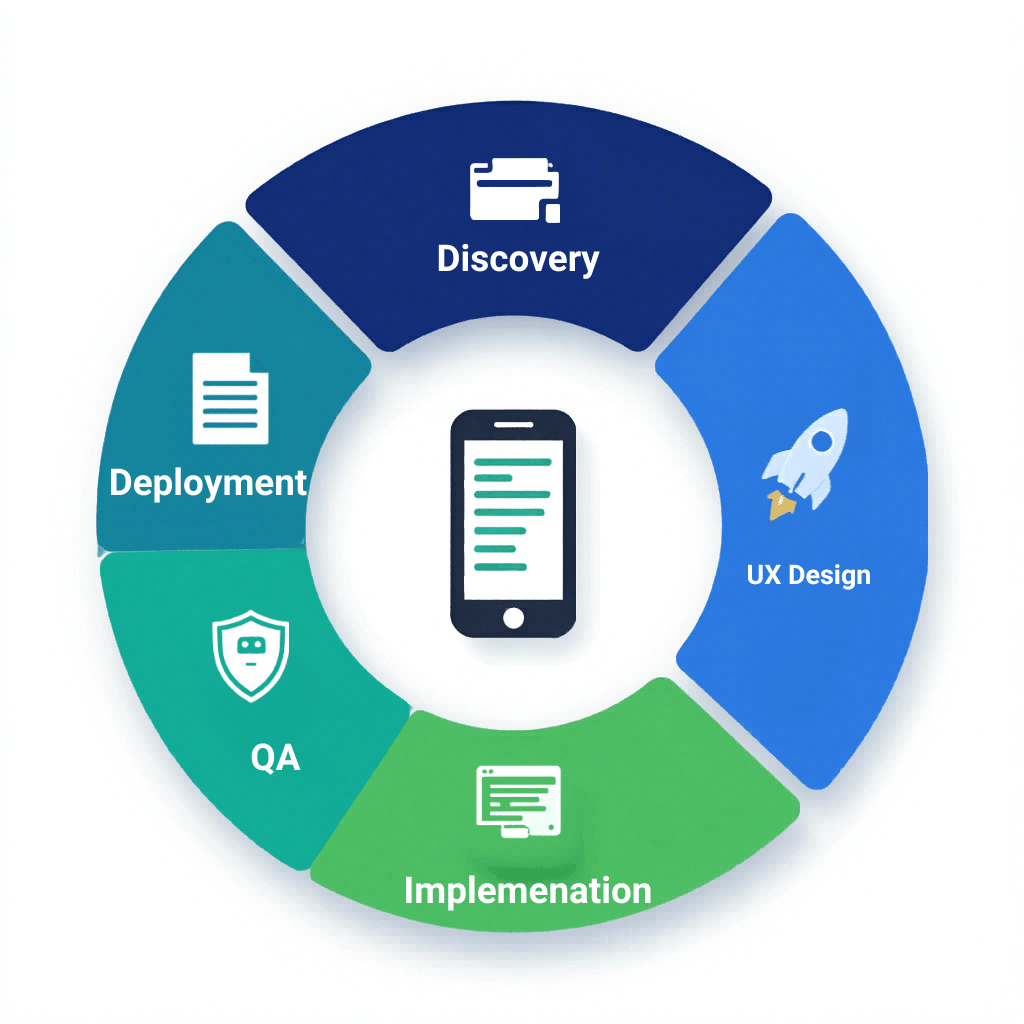
Understanding a vendor’s development process in detail — before you commit — is one of the most reliable ways to predict delivery quality. When assessing any mobile app development service in Singapore, ask for the exact process documentation they use, not a high-level slide. The following five-phase framework is how we structure every engagement at Toptest Global — and it is the standard we believe every serious provider should be able to match.
Phase 1 – Discovery & Business Process Analysis
Every project begins with a structured discovery engagement. We map your existing business processes using BPMN process mapping standards, identify automation opportunities, define integration requirements, and translate business goals into a detailed product specification. Output: a signed-off functional specification and a testable acceptance criteria framework.
Discovery is not a formality — it is where the most expensive mistakes are prevented. Teams that skip or rush discovery invariably pay for it in rework.
Phase 2 – UX/UI Design & Prototyping
User experience design is conducted in close collaboration with your stakeholders. High-fidelity prototypes are validated with real user testing before any development begins. This phase ensures that the product solves the right problem in the right way — not just that it functions technically.
Phase 3 – Agile Development & Sprint Management
Development proceeds in two-week sprints with visible progress at every stage. Sprint reviews are conducted with client stakeholders, so there are no surprises at delivery. Backlog refinement, velocity tracking, and dependency management are all handled transparently using best-practice process automation in software project management tools.
Phase 4 – QA Automation Testing with Playwright
This is the phase that most development shops either skip or execute inadequately. At Toptest, every sprint produces not just working software but a growing library of automated test cases — built with Playwright automation and platform-native frameworks — that continuously validate the application as it evolves.
Performance testing, security scanning, and accessibility audits are conducted before any release candidate is presented for client review. By the time your app reaches the App Store or Google Play, it has already passed thousands of automated test scenarios.
Phase 5 – Deployment, Monitoring & Continuous Improvement
Deployment is managed through automated CI/CD pipelines with rollback capability. Post-launch, we implement real-user monitoring, crash analytics, and performance dashboards so that the first sign of a problem triggers an alert — not a user complaint. Continuous improvement sprints are scheduled from day one of post-launch support.
Tools, Technologies & Platforms We Work With
Our technology selection is always requirement-driven, not agenda-driven. The following represents the core toolkit our teams deploy across mobile app engagements:
| Category | Technologies / Platforms |
|---|---|
| Mobile Development | React Native, Flutter, Swift (iOS), Kotlin (Android) |
| QA & Test Automation | Playwright, Appium, Jest, Detox, XCTest |
| Workflow Automation | n8n, Cflow, Zapier, custom BPM engines |
| CI/CD & DevOps | GitHub Actions, GitLab CI, Bitrise, Fastlane |
| Backend & API | Node.js, Python (FastAPI), .NET Core, GraphQL, REST |
| Cloud & Infrastructure | AWS, GCP, Azure, Firebase |
| Process Mapping | BPMN 2.0, Lucidchart, Miro |
Understanding Costs: Mobile App Development Pricing in Singapore
Pricing for a mobile app development service in Singapore varies significantly based on complexity, platform scope, integration requirements, and the vendor’s delivery model. The figures below are grounded in real project data — not back-of-envelope estimates — and are designed to give you a credible planning benchmark before you enter any commercial negotiation.
- Simple MVP (single platform, limited integrations): SGD 30,000 – 70,000
- Mid-complexity app (cross-platform, API integrations, basic automation): SGD 70,000 – 180,000
- Enterprise app (complex workflows, BPM integration, full QA automation): SGD 180,000+
- Dedicated outstaffing team (per developer per month): SGD 5,000 – 12,000 depending on seniority and specialisation
These figures assume a Singapore-based strategic layer with Vietnam-based engineering delivery — the model that Toptest operates. Pure Singapore-local development costs are typically 40–60% higher for equivalent scope.
A note on fixed quotes: Any vendor who provides a fixed project price without completing a discovery engagement is either making assumptions about your requirements or building hidden scope into the contract. Neither outcome serves you well. Reliable pricing follows — never precedes — proper discovery.
ROI Benchmarks: What Clients Achieve After 12 Months
ROI from a well-executed mobile app engagement accrues across multiple dimensions. Based on our delivery portfolio, clients typically report the following outcomes within 12 months of launch:
| Impact Area | Typical Client Outcome (12 Months) |
|---|---|
| Process cycle time reduction | 50–80% faster (onboarding, approvals, reporting) |
| Manual processing cost reduction | 30–60% reduction in labour cost for automated workflows |
| Post-launch defect rate | 60–70% lower vs. non-QA-driven projects |
| User adoption rate | 75%+ active usage within 30 days of launch (well-designed apps) |
| Time-to-market for feature releases | 40–50% faster after establishing automated QA pipelines |
These results are not guaranteed — they depend heavily on the quality of the requirements process, the maturity of the QA automation framework, and the effectiveness of the change management approach within the client organisation. But they represent what is consistently achievable when the right mobile app development service in Singapore is selected and managed well.
Frequently Asked Questions
How long does it take to develop a mobile app in Singapore?
Timeline depends heavily on complexity. A well-scoped MVP typically takes 12–20 weeks from discovery to launch. A mid-complexity enterprise app with workflow integrations and full QA automation takes 24–40 weeks. Vendors who quote shorter timelines for complex projects are either reducing scope or compressing QA — both of which create post-launch problems.
What is the difference between a mobile app development service and an outstaffing model?
A mobile app development service in Singapore is a project-based engagement: the vendor owns the delivery process and outcomes. An outstaffing model provides dedicated engineers who work under your direction as an extension of your in-house team. Both models are viable — the right choice depends on your internal management capacity, the clarity of your requirements, and whether you are building a one-time product or a continuously evolving platform. At Toptest Global, we offer both, and we advise on which fits your situation during the initial discovery conversation.
Why does QA automation matter for mobile apps specifically?
Mobile apps face a uniquely complex testing environment: hundreds of device types, multiple OS versions, variable network conditions, and constantly evolving OS APIs. Manual testing cannot provide reliable coverage at this scale. Automated QA testing software — particularly using frameworks like Playwright for web-layer testing and Appium for native mobile — provides consistent, repeatable coverage that scales with your release velocity. Without it, every release is a risk event rather than a controlled deployment.
Can Toptest Global integrate a mobile app with our existing workflow automation systems?
Yes. Integration with existing business process automation platforms, ERP systems, CRM tools, and workflow engines (including n8n, Cflow, and custom API layers) is a core competency. We design integration architecture from the discovery phase, ensuring that your mobile app extends your existing digital workflows rather than creating parallel processes that generate data silos.
What ongoing support does Toptest provide after launch?
We offer structured post-launch support packages that include SLA-backed defect response, OS compatibility maintenance, security patching, and continuous improvement sprint scheduling. Our 98% client retention rate reflects the quality of our post-launch engagement — clients stay because the relationship delivers consistent value beyond the initial delivery, not just during it.
How do I get started with Toptest Global?
The first step is a free 45-minute Automation & QA Audit with one of our senior consultants. In that session, we review your requirements, identify the highest-risk areas of your proposed app, and give you an honest assessment of what a successful engagement with a mobile app development service in Singapore looks like in practice. There is no obligation and no sales pressure — just practical, expert advice from a team that has delivered 100+ projects like yours.
The Smart Way to Choose Your Mobile App Development Service in Singapore
The decision framework is clear: evaluate rigorously, prioritise QA from day one, demand transparency in the development process, and choose a partner whose track record is visible and verifiable — not just promised. The right mobile app development service in Singapore is not the cheapest, the fastest to quote, or the one with the most impressive website. It is the one whose process, methodology, and quality discipline give you genuine confidence that what gets built will work reliably, integrate seamlessly, and scale with your business. At Toptest Global, that is the standard we hold ourselves to — across every project, every sprint, and every line of code.
Ready to build something that works from day one?
🔵 Book Your Free 45-Minute Automation & QA Audit — Speak directly with a senior consultant who has delivered 100+ mobile and automation projects. No pitch decks. No obligation. Just expert advice.
📥 Download Our Free Enterprise Workflow Optimisation Checklist — A practical, step-by-step guide to auditing your current workflows before your next mobile app project begins.